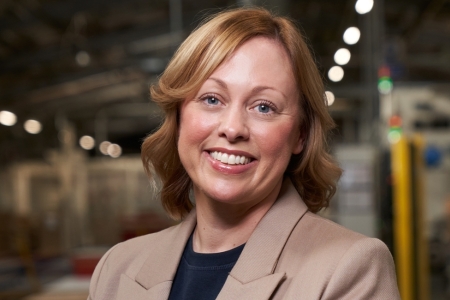
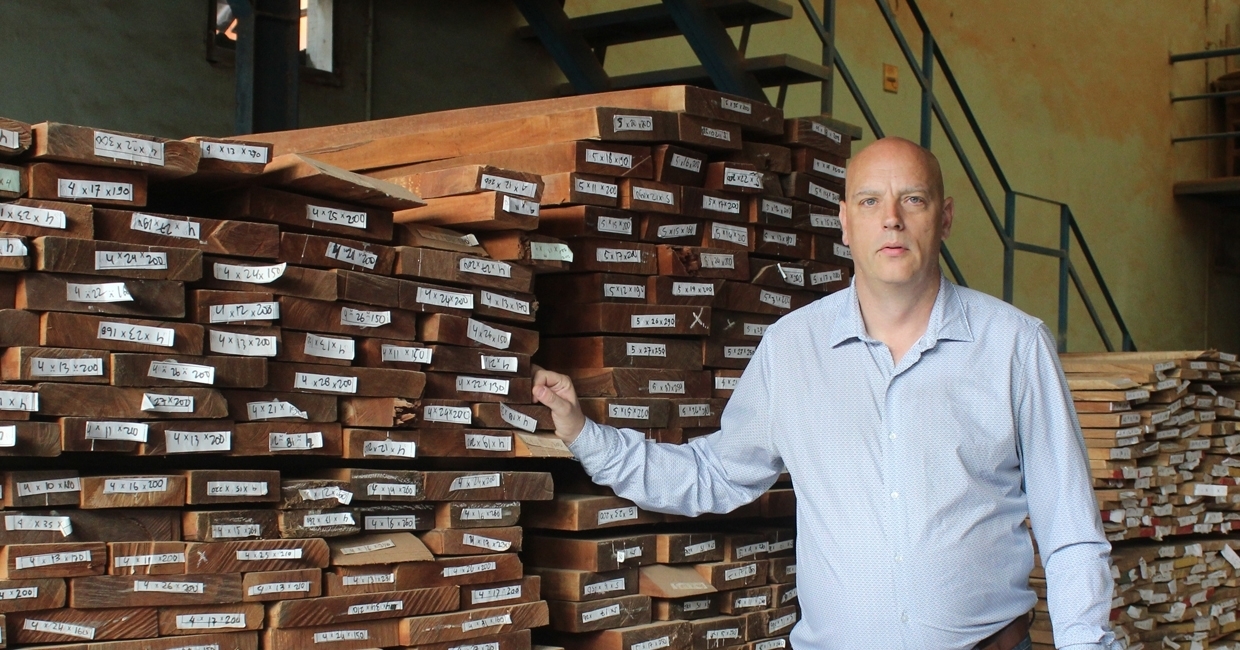
Furniture technologist Ian Priestley has worked with some of the biggest brands in the business. He started his furniture degree in the mid-90s, and joined Ducal upon graduating. After a few operational roles there, and with Nathan, he moved into field sales around 2014, before becoming a self-employed agent. In 2023, Ian returned to a development, quality and legislative role at Baker Furniture, and says he feels “honoured and privileged” to be part of another strong team.
How might a child describe what you do?
Someone who talks to people that design furniture, talks to people that make furniture, talks to people that buy furniture, and talks to people that sell furniture. Sometimes he goes on ‘holiday’ to see factories.
What’s the biggest long-term challenge you face?
Personally, changing my mindset and understanding capsule collections/smaller ranges. Cabinet ranges are now much smaller in offering, consisting of a wide variety of mixed materials. House designs are changing, dining habits have evolved, consumers are wanting more flexible living, and the technology around us is constantly developing.
Put simply, gone are the days of a catalogue containing 150 pieces of matching furniture from solid soft/hardwoods incorporating telephone tables, magazine racks, computer workstations, HiFi units, cassette/video storage, etc.
If you had 10 x your working budget, what would you spend it on?
Products are the lifeblood of any manufacturer/importer, so I would have to say investing heavily in every new development – but, of course, whilst operating within market constraints. The higher-priced factories are often so for a reason – better materials, superior equipment and finer hardware. Typically, those with an established quality infrastructure will also be those that have similar infrastructures that can respond to increasing social, ethical and environmental requirements.
What would be the title of your autobiography?
From Little Acorns (I owe a lot to the Ducal logo!).
What does ‘work/life balance’ mean to you?
Ducal adopted a total quality management (TQM) programme in 1998, and one early teaching that stuck with me was the Japanese philosophy of Ikigai, a concept to blend passion, talent, purpose and fulfilment. Put simply into four pillars it asks: Do you enjoy what you do? Are you good at what you do? Does the world need it? And does it pay to support your lifestyle?
I think I achieve at least a couple of the above, and as a consequence, my job never feels like work.
Who’s been your most influential professional mentor?
There were almost 1,000 people who worked at Ducal when I first joined on industrial placement, all of whom I watched, listened to, and learned from. Many years later I visited an account in the North West and they showed me a postcard from the late Mr [Jeffrey] Wiseman, dated around 1987. It was a thank you and well wish that he’d written on the train home after a day visiting his customers.
The professionalism he’d fostered across the business, coupled with the above personal gesture, stuck with me, and reinforced my attitude of leading by example and treating everyone equally well.
What advice would you give your younger self?
The disciplines and routines were rigid at the time, but the bigger picture has become clear the older I get. I’d tell myself to look around and fully appreciate how lucky you are to have begun your journey at this business.
What’s been your best day in business to date?
Amongst various tricky challenges, I’ve also had many incredible highs and pleasing achievements. Receiving my first-ever display order (from retailer Paul Adams of Hull, a Sutcliffe Trafalgar Teak dining set!) remains a personal favourite from being out on my own representing the company – having to make commercial decisions quickly and independently.
What’s the biggest myth about our industry?
That it’s a closed network dominated by old men in light brown overcoats.
Where do you see the industry going in the next 5-10 years?
Rightly, there is a lot of legislation on the horizon regarding product lifecycles and environmental impacts. I expect product development to reflect companies embracing and adopting this requirement into their designs and materials. Ecommerce will only get stronger as well, having, in my view, both positive and negative impacts.
What question do you wish we’d asked? How would you have answered?
Q: Having seen both elements at close quarters, Ian, what do you support the most – manufacturing or importing?
A: I honestly don’t think there would be room in this edition for a considered answer!
This interview featured in April's issue.