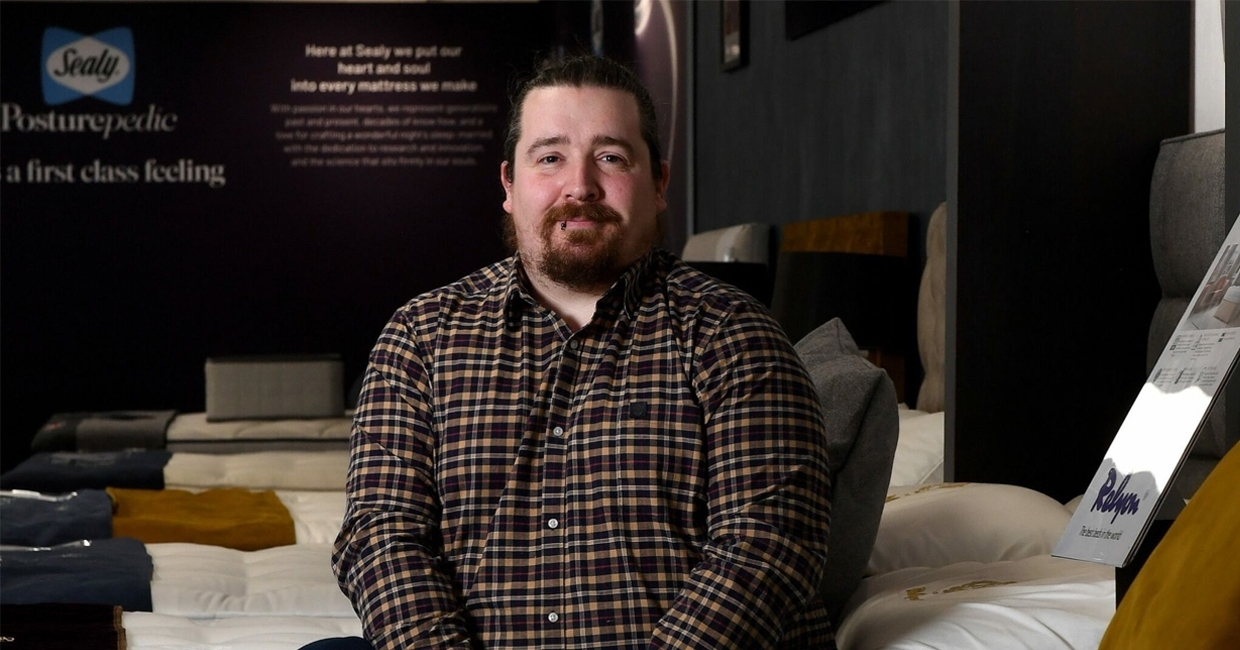
Matt Randle's bed retail journey started in 2010, when he landed a part-time sales role at Dreamland Bedding Centre, in Brierley Hill near Dudley. He was promoted to GM four years ago – a journey which he says has given him “a comprehensive understanding of retail operations, customer experience and commercial strategy”. Today, he leads with a focus on sustainable growth, team development, and long-term value creation for the 50-year-old business and the communities it serves …
How might a child describe what you do?
My three-year-old daughter believes I go to work to “earn pennies by sleeping on beds”, which, in fairness, is a charmingly simplified interpretation of the mattress industry. At its core, though, it reflects something quite accurate – helping people improve their quality of life through better sleep.
What’s the biggest long-term challenge you face?
The easy answer would be to point to the internet and the ongoing race to the bottom that it can encourage, with some companies competing aggressively on price at the expense of quality and service.
However, that is not where we position ourselves. We don’t seek to compete purely on price – instead, we differentiate through the strength of our brand, the quality of our offering, and the level of service we provide to our customers.
The more meaningful long-term challenge is sustaining personal and organisational momentum. I am naturally driven and thrive on progress, so maintaining that sense of purpose, particularly during periods of operational steadiness, is important.
Strategically, I’m deeply focused on community integration – strengthening local economic ecosystems, fostering partnerships across the borough, and supporting access to opportunity, particularly in education. Since becoming a parent, that commitment has sharpened, I want to ensure the next generation has access to the same, if not better, opportunities.
If you had 10 x your working budget, what would you spend it on?
Interestingly, I don’t believe scale of budget is the primary constraint to progress. At Dreamland, we’ve prioritised financial resilience and disciplined reinvestment. Additional capital would accelerate initiatives, particularly in sustainability, colleague development, and community programmes – but meaningful impact is ultimately driven by clarity of purpose and execution, not just expenditure.
What would be the title of your autobiography?
Might as Well Have a Go. I’ve always taken an open, opportunity-led approach, leaning into challenges, even without perfect certainty. That mindset has consistently opened doors, often leading to outcomes and opportunities that couldn’t have been predicted at the outset.
What does ‘work/life balance’ mean to you?
I see it less as a balance and more as an integration. When you genuinely enjoy what you do, the distinction between ‘work’ and ‘life’ becomes less rigid. Many of the initiatives I’m involved in outside of core hours, particularly those linked to community, education and sustainability, are both professionally aligned and personally fulfilling.
That said, I’m mindful that this approach can tip too far. There have certainly been periods where I’ve taken on too much, effectively spinning too many plates at once. During those times, trusted colleagues, many of whom I consider friends, have been quick to remind me to slow down and recalibrate.
I’m deeply passionate about contributing to and improving the local area as a place to operate within, which naturally draws me into additional commitments. However, I’ve come to appreciate the importance of being intentional with my time, creating space to step back, reset, and remain present outside of work. For me, it’s about establishing a sustainable rhythm, rather than striving for a perfectly divided balance.
Who’s been your most influential professional mentor?
I’ve been fortunate to work alongside [Dreamland’s owner] Mike Brown, who has been an invaluable sounding board. Rather than traditional mentorship, his support has enabled me to think independently and shape my own leadership style. In turn, I now prioritise mentoring others, particularly younger colleagues, to help them navigate their own paths.
Equally influential has been watching leaders like Steve Pickering [Sussex Beds] and Steve Adams [MattressOnline] operate. Seeing how they approach decision making, manage complexity, and balance commercial performance with people-focused leadership has been genuinely insightful. What stands out is not just what they do, but how they do it, the consistency, and the ability to translate strategy into meaningful action on the ground.
What advice would you give your younger self?
Don’t overthink the small things. Earlier in my career, I focused heavily on detail to the point of unnecessary stress. With experience, I’ve learned to focus on the bigger picture, trust others, and delegate effectively. Not everything needs to be done exactly as you would do it to be successful.
What’s been your best day in business to date?
From a commercial perspective, reopening after the Covid-19 pandemic was exceptional. However, more meaningful moments come from community impact, such as hosting a live concert in-store, welcoming new audiences, and creating inclusive experiences, particularly for neurodiverse individuals. Seeing the space used in new, socially valuable ways was incredibly rewarding.
What’s the biggest myth about our industry?
That retail is a dead-end career. In reality, it offers a wide range of diverse and often-overlooked pathways, from operations and leadership to supply chain, sustainability, and digital transformation. It’s an industry that can develop both commercial and interpersonal skills at a very high level, often at pace.
There’s also a strong sense of progression for those willing to engage with it fully. The longevity and loyalty seen across the sector are a testament to the opportunities it provides, as well as the sense of fulfilment and purpose many people find within it.
What should everyone in our industry either stop or start doing?
I’m not convinced it’s my place to prescribe what others in the industry should or shouldn’t be doing. One of the sector’s greatest strengths is precisely its diversity of thought, operating models, and priorities. That variation is what creates differentiation between independents and nationals, premium and value-led propositions, and more traditional versus progressive approaches. Rather than uniformity, the industry benefits from that plurality. Different strategies resonate with different customer segments, and that’s what keeps the market dynamic, resilient and competitive.
That said, one mindset I do think we would benefit from moving away from is a tendency to be overly reactive, particularly when trading conditions are challenging. It’s easy to attribute performance solely to external factors, but sustainable growth rarely comes without proactive effort. Markets fluctuate, but there is almost always scope to innovate, refine, and re-engage. A more solutions-focused, self-reflective approach, rather than passive frustration, would serve the industry well.
Where do you see the industry going in the next 5-10 years?
The industry will continue to evolve in cycles, influenced by macroeconomic pressures, technological innovation and shifting consumer expectations. Periods of growth and contraction will likely become more pronounced, requiring businesses to be increasingly agile and resilient in how they operate and invest.
Digital channels will remain central, but their role will extend far beyond simple transactions. They will increasingly serve as the primary touchpoint for discovery, research, and personalised engagement. Advances in data analytics, AI and automation will allow businesses to better understand customer behaviour, anticipate demand, and deliver more tailored experiences at scale. However, this also raises the bar for execution – consumers now expect seamless, intuitive and consistent interactions across every digital platform.
At the same time, physical retail will continue to play a critical role, but its purpose will evolve. Stores will need to justify their existence not just as points of sale, but as destinations that offer meaningful, memorable experiences, whether through service, brand storytelling or community engagement. The integration of digital and physical environments will become increasingly important, with omnichannel models becoming the norm rather than a differentiator.
A major shift compared to a decade ago is the rise of sustainability as a core consumer priority. Ten years ago, it was often a secondary consideration or a niche concern – today, it is front of mind for a growing proportion of consumers. Shoppers are more informed and more selective, actively seeking out brands that align with their values around environmental impact, ethical sourcing and transparency.
This is something we actively reference when talking about brands such as Harrison Spinks, where sustainability is not just a marketing message but a core part of the product and supply chain. Using examples like this helps demonstrate how sustainability can move beyond theory into a tangible differentiator that resonates with customers. This shift is not just influencing purchasing decisions but also shaping brand loyalty and perception.
As a result, sustainability will move from being a competitive advantage to a baseline expectation. Businesses will face increasing pressure, from both consumers and regulators, to demonstrate credible, measurable progress rather than broad commitments. Those that fail to do so risk losing relevance, while those that embed sustainability authentically into their operating models will be better positioned to build long-term trust.
Ultimately, the businesses that succeed will be those that can operate fluidly across channels, use data intelligently without losing the human element, and adapt quickly to changing conditions while maintaining a clear, authentic brand identity that resonates with increasingly value-driven consumers.
Find out more about the UK bed sector in this year's Bed Buyer supplement.