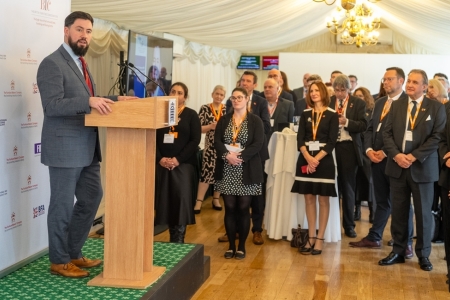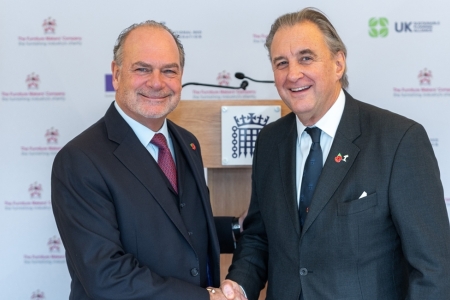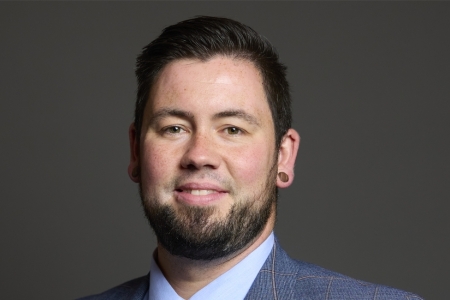
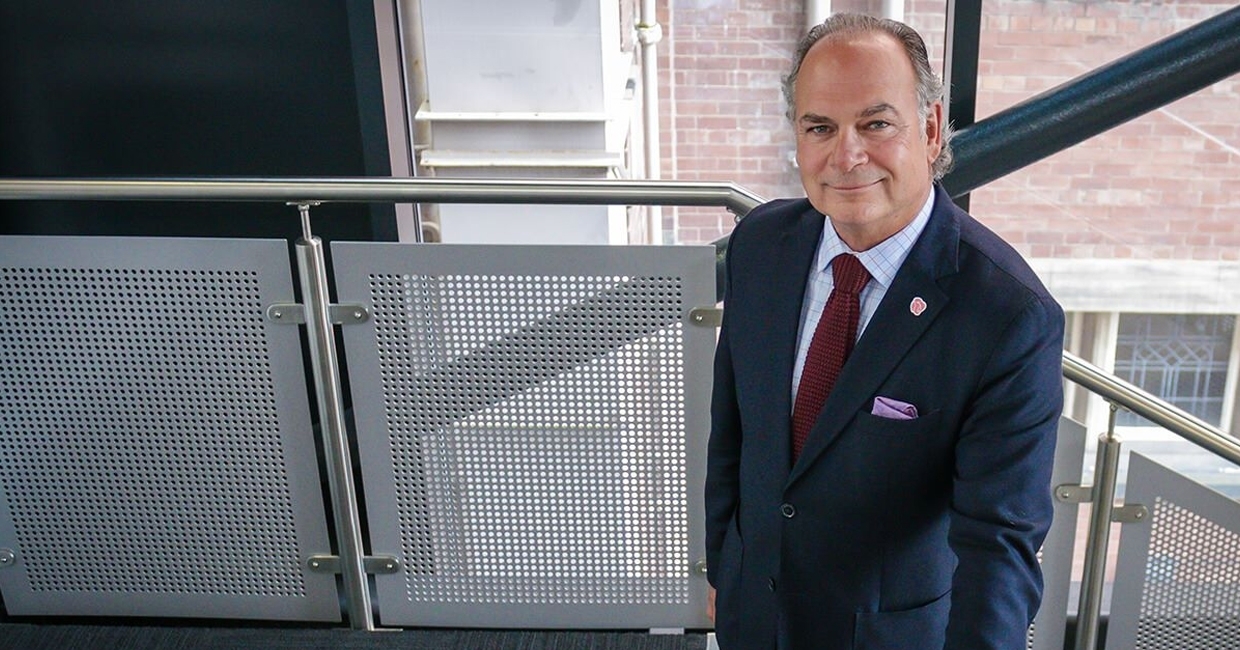
Tasked with ensuring the UK furniture industry’s needs are heard at the highest levels, Tony Attard OBE, frequent sector figurehead and group CEO of textile manufacturer Panaz, was appointed chairman of the British Furniture Confederation (BFC) last year. In his acceptance speech, he made it clear that he intended to tackle the barriers standing in the way of enterprise – Furniture News’ Paul Farley pushed him for details …
Congratulations on your appointment! Are you looking forward to getting stuck in?
Thank you. I’m ready to hit the ground running. Politics shapes the decisions we make in the boardroom, but I’ve always advised executives to cut through the noise and focus on long-term strategy.
You’re used to wearing many ‘hats’ and representing the industry at various levels. How does your appointment as BFC chair differ to what you’ve done before?
I’ve been fortunate to serve across many parts of the industry and public life. I started on the board of the BCFA (now CIUK) and later became its chairman. I served as president of our industry charity, the FTBA, for eight years, before it merged with the Furniture Makers, and was master of the Worshipful Company of Furniture Makers [The Furniture Makers’ Company] in 2022.
My public appointments have included chairman of Marketing Lancashire, chairman of the Institute of Directors (IoD) in the North West, and High Sheriff of Lancashire in 2018.
There’s an old saying: “If you want something doing, ask a busy person.” I've certainly enjoyed it, and the experience has helped my company navigate a range of business challenges. Along the way, I’ve also made many lasting friends, which I think is the hallmark of a productive life.
Do you feel the BFC (as a lobby group) and the All-Party Parliamentary Furniture Industry Group (APPFIG) truly have the potential to effect meaningful change?
It’s clear to me that you must be actively involved to make a difference. The APPG reflects both our size and importance, providing an official conduit to MPs and the workings of Government. It’s up to us to make it work for our industry.
Our public affairs strategy is based around four pillars: skills and education; trade and exports; standards and regulations; and the environment and the circular economy.
Five of our board members are from our five trade associations [FIRA, BFA, NBF, CIUK and the UK Sustainable Flooring Alliance] and they advise on these pillars. We leverage this insight to raise issues with the APPG accordingly and provide informed commentary on current and future Government policy.
Based on your incoming speech as chair, you’re a critic of Government policy. What, in your opinion, are the three biggest policy missteps our current ruling party has made?
If I had to pick three, they would be:
Business succession and reinvestment: Changes in business property taxation mean that family-owned companies need to plan carefully to ensure long-term continuity. It’s a complex area that can affect decisions on investment, growth, and succession.
Employment and workforce planning: New employment regulations make it more important than ever for businesses to think strategically about hiring, training, and retaining talent. There’s a growing emphasis on automation and digital tools, which can complement human skills rather than replace them.
Cost pressures and competitiveness: Rising wage, employer National Insurance Contributions, insurance, compliance, and energy costs all affect the cost of doing business. At the same time, companies are operating in an increasingly global market with competitive imports. Businesses need to be agile and innovative to remain competitive while managing these pressures.
Do you take issue with their intent, their implementation, or both?
There remains a gap in how some measures translate into the day-to-day reality of running a business. In particular, there can be limited appreciation of how different ownership models operate and what motivates business owners and shareholders. Bridging that gap is essential to ensure policy supports long-term investment and sustainable growth.
What are your thoughts on the changes to inheritance tax on family businesses in particular?
Changes to inheritance tax are a major consideration for family-owned businesses, as they influence decisions around long-term investment, growth, and succession planning. For many business owners, it’s a prompt to reassess how they structure their companies to ensure continuity and sustainability.
It’s an area of personal and professional interest to me, and one where careful planning and strategic advice can make a real difference in securing the future of a family business.
What are the biggest legacy issues the Government inherited from previous leaders, and how do these continue to hinder the furniture industry?
The furniture industry faces several long-term structural challenges that have carried over from past economic decisions. Exchange rate fluctuations, trade barriers and regulatory changes have all had an impact on export opportunities and the competitiveness of UK-made furniture, for example.
These factors highlight the importance of strategic planning and industry advocacy to ensure businesses can adapt, grow, and take full advantage of global markets.
As a British fabric specialist, flammability regulations are understandably close to your heart. What would be your preferred outcome of the long-awaited UK FR review?
My commitment to safe fabrics began as a student at Manchester University. In 1979, I witnessed the Woolworths fire, which tragically killed 10 people and injured many firefighters. That experience inspired me to dedicate my career to creating fabrics that are not only beautiful but enhance safety in homes and workplaces.
Current flammability laws date back to 1988, yet technology has moved on. Fires remain a serious risk, as recent incidents in Switzerland show, but modern materials and treatments mean furniture can now be both attractive and safe.
For the review, I would like to see regulations reflect current technology – removing outdated testing requirements for materials no longer used, and embracing the PFAS-free flame-retardant technologies that are both cost-effective and environmentally responsible. This approach ensures safety without compromising design or innovation.
Do you feel the policymakers’ approach to this issue has been mishandled?
The current regulations have been under review for some time, and naturally, ministers responsible have changed over the years. We are now awaiting guidance from the most recent ministerial appointment, and it will be important to see how the review progresses under their leadership.
Have you made any progress at the helm of the BFC thus far, and what’s in the pipeline?
I’d like to think so. One of my priorities is to strengthen our Public Affairs Advisory Committee (PAAC), which brings together senior business leaders from our trade associations. My aim is for the PAAC to become the heart of our policymaking, and I’m keen to ensure its members have a real say in what will make a tangible difference for the industry.
Since taking up the role, I’ve held several meetings in Westminster with cross-party representatives, and attended party conferences to network and understand broader perspectives. These engagements are helping shape the next steps in our advocacy and policy priorities.
Although our industry is large – with 33,000 companies, 250,000 employees, and a combined turnover of £40b – our influence could be even greater if we work alongside like-minded organisations. To that end, I’ve been in contact with the UK Fashion and Textile Association and Family Business UK to explore opportunities for co-operative action.
If you could achieve only one thing during your tenure as BFC chairman, what would it be?
To ensure that the UK furnishing industry has a robust industrial base and an economic environment in which it can truly thrive.
How can others in the industry best make their views heard? Where should any passionate would-be lobbyists begin?
The PAAC is the ideal starting point. Members have a real opportunity to influence strategy and engage directly with the APPG, and we are actively looking for new voices to join.
We are also planning more exhibitions in Westminster to showcase our industry and facilitate networking with policymakers. Looking ahead, we hope to bring MPs to UK exhibitions, such as Clerkenwell Design Week, to give them first-hand insight unto our sector.
What gives you the most cause to be optimistic when faced with this responsibility?
I’m naturally optimistic – I wouldn’t be in business otherwise. My wife says I’m relentlessly cheerful. Perhaps that – along with, “He could never say no” – will make it onto my tombstone!
Read the expanded interview in April's issue.