After a lengthy campaigning battle by Britain’s creative industries, the Government has made a U-turn on copyright and AI policy for the moment, reports Anti Copying In Design (ACID).
The DSIT and DCMS publication on Copyright and AI was released some 13 months after the Copyright and AI Consultation. ACID says this consultation was unprecedented, attracting 11,500 responses from organisations and individuals within the creative industries.
The Government’s approach then was to recommend that creators 'opt out' if they did not want AI big tech to use their intellectual property (IP) without permission.
According to Reuters, Secretary of State Liz Kendal, MP signalled several areas the Government will now prioritise instead of the scrapped plan: more control for creators over how their work is used; licensing solutions (especially for smaller creators); transparency around AI training data; tackling 'digital replicas' (AI copying people’s likeness); and the possible labelling of AI-generated content to combat deepfakes.
"The ensuing outrage following the original consultation was palpable," says ACID, "and the short-term 'good news' is that there has been a significant about-turn on AI copyright policy. The Government has abandoned its previously favoured proposal to let AI companies use copyright material under a broad 'opt-out' system, where creators would have had to actively refuse access. This was unthinkable.
"There is to be a pause for any legislative plans, and the Government will go back to the drawing board saying it has no preferred model. They will restart conversations with all players, and maintaining copyright law is the preferred route, looking at various licensing frameworks, better transparency, and control for creators.
"We welcome that Government has given a commitment to gather more evidence and consult further in a 12-month period. But where does this leave creators? What are the downsides? This is a triumph for lobbying but this reset leaves creators in a mixed position. In the short term, it is a win, the Government has stepped back from an 'opt-out' model many feared would weaken control over their work. Existing copyright law remains in force, so creators retain legal protection and negotiating leverage.
"However, the detrimental effect for millions of creators is that it kicks the can down the road, yet again. The lack of clarity makes the future blurred and prolongs uncertainty. This will make it even more difficult for artists, writers, designers and rights holders to plan, license content, or challenge AI use at scale. It is a fact that enforcement remains out of reach for most lone, small and SME creators with an even greater difficulty in monitoring unlawful use of their work."
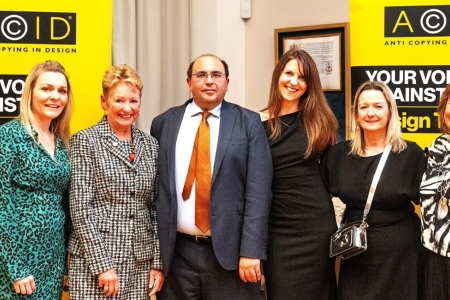
Dids Macdonald OBE, co-founder of ACID, and its director of campaigning, says: “Whilst we welcome the fact that Government listened to reason, big tech will be rubbing their hands in glee as they can continue data scraping work with no new restrictions or licensing regime yet in place. They are now in an even better position to hide behind anonymity and regulatory uncertainty. Transparency does not enter their logarithm vocabulary, nor recompense for unlawful use or attribution to IP originators”.
Laura Newbold Breen, ACID’s CEO, adds: “It is reassuring to all to see the opt-out suggestion abandoned – however, designers and copyright creators everywhere need to see proactive change to ensure their IP can be protected as AI grows exponentially.“
ACID says it will continue to maintain close dialogue with Government, while supporting many of the positive aspects of AI, to ensure that creator rights are not further eroded by unlawful use and lack of transparency and that the UK’s IP creators must have attribution.