Provenance matters – especially when customers are making comparisons on the shop floor. For Luke-Keegan Floyd, director of Australian joinery and upholstery hiring agency Trial By Fire Recruitment, the industry should be more open about what goes into the construction of furniture …
I think furniture manufacturers should show people more of what actually goes into making their furniture.
We see plenty of the finished product. The sofa’s in the showroom, the fabric looks great, the cushions are sitting perfectly and everything is presented exactly as you would expect.
What I do not see nearly as often is what that same sofa looked like before the fabric went on.
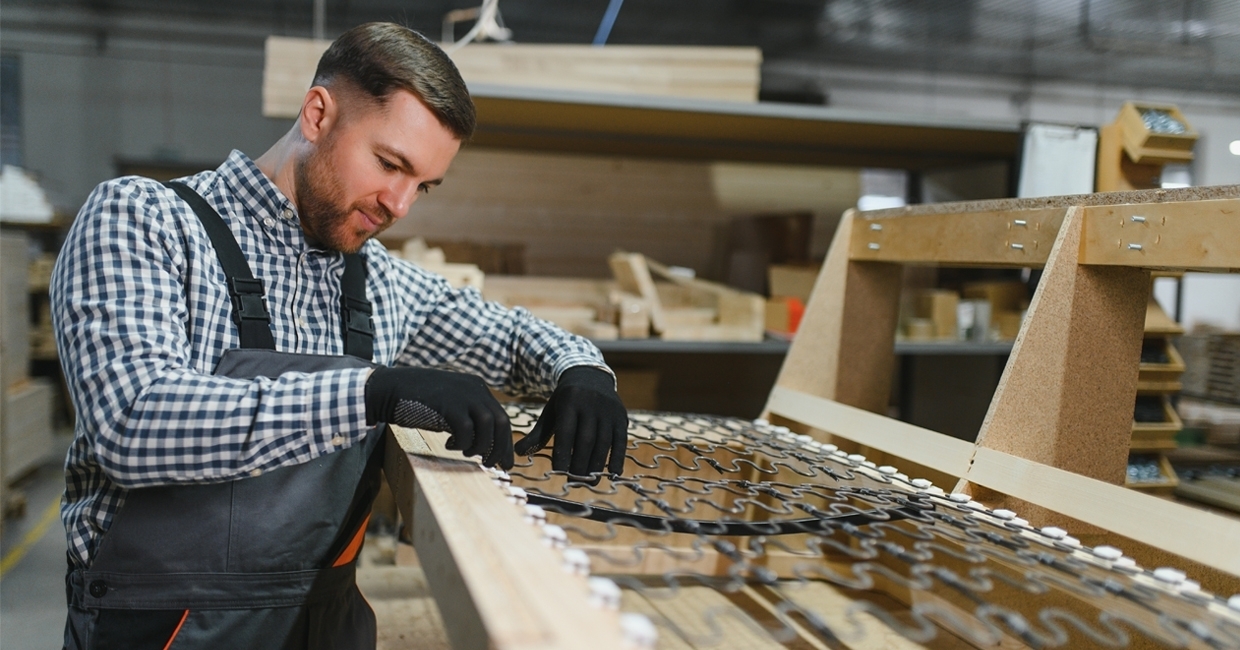
I want to see the frame. I want to know what it’s made from, how it has been put together, what suspension has been used and what goes into the cushions. I want to see it halfway through being upholstered, and I want to see the people actually doing the work.
If you’re making high-end or bespoke furniture, I think you should be proud to show that. There can be a huge difference between two sofas that look fairly similar once they’re finished – the materials can be different, the construction can be different and the skill and time that have gone into making them can be completely different.
The problem is that once everything is covered up, most customers have no way of knowing that. They see two finished sofas, perhaps at very different price points, but they don’t necessarily understand what’s underneath or why one has been made to a different standard.
I’m sure there are manufacturers who probably don’t want customers looking too closely underneath the fabric, and I can understand why. But if you’re doing things properly and you are genuinely proud of what you’re producing, why would you not show it?
This is something I’ve started thinking about more because of the work I do in recruitment. I spend a lot of time speaking with upholsterers, furnituremakers and other skilled tradespeople who are already employed. Quite often, I’m asking somebody to consider leaving a workshop they know and joining one they know very little about.
I can tell them it is a good company. I can tell them they produce quality furniture and that the workshop is well run. But realistically, that only means so much coming from a recruiter.
It becomes a much easier conversation when I can actually show them. If I have photos of the workshop, frames being built, furniture halfway through production, the machinery being used and the finished work coming out the other end, then I have something real to talk about with that person. They can look at it and decide for themselves.
Good tradespeople are interested in those details. They want to know what they’re going to be working on and what sort of standard the business works to. If somebody has spent years getting good at upholstery or furnituremaking, it makes sense that they would care about the quality of the work they’re going to be doing every day.
And I don’t think businesses need professional photographers or highly produced videos to show this. Sometimes I would rather see a photo somebody has taken in the workshop that morning. Show a frame before it gets covered. Show something halfway through production. Show your upholsterers working on it. Explain why you use a particular material or why you build something the way you do.
There’s a lot of skill inside furniture businesses that customers never get to see, and quite often potential employees don’t get to see it either. If you’re doing good work, show people what good work actually looks like.