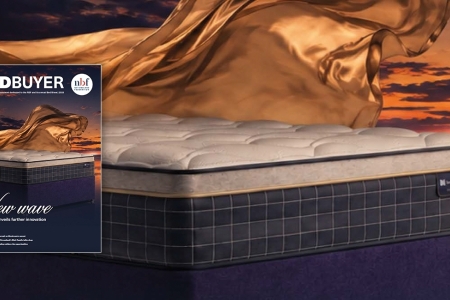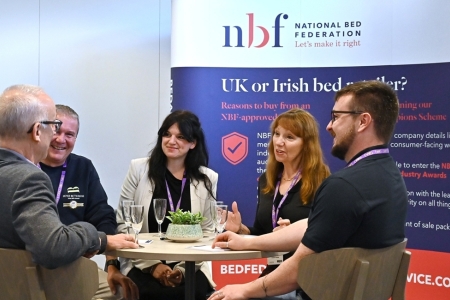
The latest survey conducted by the National Bed Federation (NBF) on consumer mattress buying habits confirms that the cost of living crisis is affecting the price that people are prepared to pay for a new mattress, although they are replacing their mattress more regularly.
The 18th annual NBF Consumer Bed Buying Survey, which questioned 1,000 adults who purchased a new mattress within the last year, reveals that the mean price paid fell YoY by -16% to £543. Furthermore, almost half the respondents paid less than £400 compared to only 40% last year, while the proportion spending £800 or more fell from 28% to 20%.
NBF executive director Tristine Hargreaves says: “This is a clear indication of the challenges facing our members and bed retailers across the country. With ever-increasing cost pressures on businesses, any drop in consumer spending in our sector is a concern.”
Mattresses purchased separately continued to increase, accounting for 64.5% of all purchases, up from 52% in the previous report. This rise was driven by a strong increase in roll-up mattresses which accounted for 33% of purchases, up from 23.5%. They were popular across all age groups, ranging from 22.5% among 25–34-year-olds to almost 40% among 45-54-year-olds. Even the over-55s have embraced roll-up mattresses, with 36% choosing this option. Flat mattresses accounted for 32%, up from 28%, with the over-55s preferring this option more than the other age groups.
Mattress and bedstead combinations accounted for 22%, down from 29%. These were most popular among younger age groups, while traditional divan sets accounted for only 13%, down from 19%.
The average age of the mattresses being replaced was 6.84 years, down from 7.28 years in the previous report. More than three-quarters (76.5%) were replaced before they were 10 years old and almost 40% were replaced in under five years.
Despite the general assumption that younger consumers are more conscious of the environment and sustainability, they are still the most likely to replace their mattress within five years. In the latest research, the figure was 56.5% among 16–24-year-olds and 60% of 25-34-year-olds, compared with just 21.5% of those 55 and over. Of course, this could be for a number of reasons such as purchasing lower-quality mattresses or moving home more often, says the NBF.
One in seven (70%) respondents said they would be prepared to pay more for a sustainably designed mattress that could be completely dismantled and fully recycled at the end of its life.
Older age groups were less inclined to pay more for sustainable design. This time, 62% of the over-55s said they would pay more, compared with 74% of 16–24-year-olds. The highest figure was among 25–34-year-olds, at 81%. On average, the premium that people were prepared to pay was 8%.
Online purchases accounted for 55%, up from 52.5%. In-store purchases accounted for 41%, down from 44%.
The 45-54s were the strongest online purchasers at 63%, just ahead of the 35-44 age group at 60%. Interestingly, more than 55% of the over-55s bought online, while only 50% of the 16-24-year-olds used this method to purchase their mattress.
Mattress brand awareness remained relatively low. A total of 40% of respondents said they could not remember which brand they had bought, compared with 42% previously. The top three most popular brands (in order) were Silentnight, Dreams and Emma.
The NBF Consumer Bed Buying Survey was conducted by Censuswide between in July 2026, based on a nationally representative sample of 1,000 individuals who purchased a bed or mattress in the previous 12 months.