For furniture manufacturers that rely on timber and wood-based materials, the EU Deforestation Regulation (EUDR) is introducing a new level of scrutiny into supply chains. However, writes Matthew Ekholm, digital product passport (DPP) and circularity specialist at Provenant, while much of the conversation surrounding the regulation has focused on compliance deadlines and due diligence requirements, many businesses are discovering that the biggest challenge lies elsewhere – accessing the data needed to prove compliance …
The clock is ticking. Large and medium sized furniture businesses have just three months – to 30th December 2026 – until the EUDR application deadline. To place products on the EU market, businesses will need to demonstrate that the timber used within their products is deforestation-free and can be traced back to its source.
For many furniture manufacturers, this requires a level of visibility into sourcing and supplier networks that they have never previously needed.
The risks of siloed compliance
The challenge that manufacturers are facing is that much of the information needed for compliance with the EUDR is often spread across suppliers, manufacturers, importers and certification bodies. While businesses may already collect supply chain information for procurement and operational purposes, EUDR requires a far more detailed understanding of where materials originate, how they move through the supply chain, and the evidence needed to support compliance claims.
As supply chains become larger and more complex, obtaining this information can quickly become a significant operational challenge. Yet while EUDR is driving immediate action, the need for greater transparency extends far beyond a single regulation.
The shift to broader transparency
Customers, investors and regulators are increasingly demanding greater visibility into how products are sourced and manufactured. For furniture businesses, traceability is rapidly becoming more than a compliance requirement – it is becoming an essential business capability.
Many of the foundations needed for EUDR compliance are also being established through other sustainability initiatives. From DPPs under the EU's Ecodesign for Sustainable Products Regulation (ESPR) to wider environmental reporting requirements, businesses are being asked to build a much clearer picture of their products and supply chains.
The ESPR is part of the European Commission’s broader Circular Economy Action Plan. It came into force in the summer of 2024 and will apply to any furniture business placing products on the EU marketplace, regardless of where they are made.
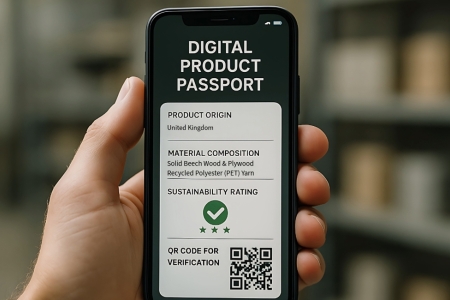
As part of the ESPR, the use of DPPs will be mandated to hold product data pertaining to its sustainability, in order to encourage circular business practices. The regulation outlines the ambition for products to be longer lasting, less energy intensive, be easier to recycle and repair, contain fewer harmful materials, and include more recycled content. Furniture businesses need to adopt a 'sustainability-first' mindset across all aspects of their processes and supply chain management to remain aligned with these evolving priorities.
Therefore, rather than viewing EUDR as a standalone regulatory hurdle, furniture manufacturers should see it as part of a broader shift towards product transparency. The introduction of the EUDR and the implementation of DPPs on the horizon is an opportunity for organisations to strengthen supplier visibility, improve product data management and enhance traceability. The number of sustainability regulations is only increasing, and businesses who’ve implemented DPPs are likely to find themselves better prepared – as DPPs, and the data they require, can be used as a tool to simplify compliance with future sustainability regulations.
Taking a holistic view of sustainability
While accessing the data from suppliers, manufacturers, importers and certification bodies is required for compliance with EUDR, furniture businesses can utilise this data for additional sustainability initiatives down the line. Rather than seeing these requirements as siloed, separate tasks, those that combine data, and take a step back to a more holistic view, will be creating a future-proofed business.