
Poltronesofà has arrived on the British high street, prompting a re-evaluation of what’s inside the nation’s sofas, writes Tim Hudson, UK representative for Italian furniture mechanism suppliers CIAR and Nisi. Is the trade ready?
In the early 1960s, Britain had a problem. Two tribes of young men – both passionate, both certain they were right – were fighting over the same territory.
The Mods rode Italian scooters. Lambrettas, Vespas. Sleek, modern, engineered in a country that understood style as a functional value. The Rockers rode British iron – BSA, Triumph. Powerful, characterful, and rooted in a tradition that had served them well for decades.
They fought on beaches. They fought in the press. They fought because they represented two genuinely different ideas about what the future should look like.
Sound familiar?
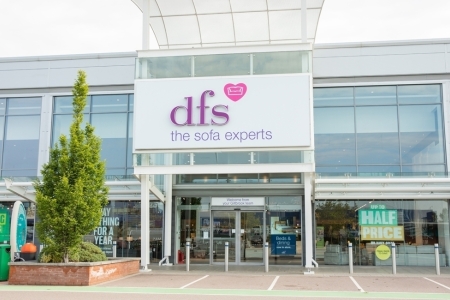
In 2026, the battle has moved indoors. The territory is the British high street. The combatants are Poltronesofà – 96 stores, Italian ownership, Italian component philosophy – and DFS, the undisputed British champion of the sofa market. One arriving with continental confidence. The other defending ground it has owned for decades.
And somewhere in the middle, on a shop floor in Solihull, a 70-year-old woman is trying to decide which side she's on.
First contact
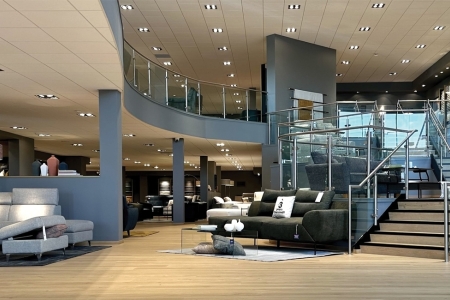
The date was 12th March 2026. Overnight, 96 ScS stores became Poltronesofà. New fascias, new energy, new philosophy. But the most interesting changes weren't on the walls – they were inside the furniture.
I walked the floor the following day with a specific mission – find out what's actually in there.
Four Nisi sofa bed mechanisms – products I represent in the UK market, as part of my role supplying CIAR and Nisi mechanisms to the British trade. Right there, in plain sight, on a British high street. Clean Italian engineering, built around the designer's vision, rather than the other way around. And among the motion furniture, some recognisably Italian thinking.
This wasn't a rebrand. It was a statement of component intent.
The component conversation
For most UK retailers, the component conversation happens behind closed doors – between buyers and suppliers, in trade shows like the Furniture Component Expo, away from the shop floor. The consumer never sees it. The salesperson rarely understands it.
That's changing.
Italian ownership brings Italian component thinking. Higher standards. More technical rigour at the point of specification. And an expectation – built into the culture of manufacturers like Nisi – that the mechanism isn't a commodity to be value-engineered down to the lowest acceptable price. It's the architecture of the experience.
The question for every UK sofa manufacturer and retailer watching this unfold is straightforward – is your supply chain ready for a market that's starting to care what's inside?
Know what’s inside?
What surprised me most wasn't the mechanisms. It was the people.
The staff knew their product. Not in the vague, brochure-learned way that passes for product knowledge in much of UK retail furniture. They could articulate movement, function, comfort. They understood what they were selling from the inside out.
That doesn't happen by accident. Poltronesofà runs what it calls Poltronesofà University, a formal training programme designed to ensure consistent sales expertise and technical product knowledge across every store, in every market. Italy, France, Belgium, Switzerland, and now the UK.
Think about what that means on the ground. A sales consultant in Solihull, trained to the same standard as one in Milan. Understanding dual-motor systems, zero-wall technology, lift-and-rise functions. Able to have a genuine conversation about ergonomics with a customer who simply wants to be comfortable.
That's a Mod move. And it raises an uncomfortable question for the rest of the UK market – when did you last train your staff to explain what's inside the sofa?
Rocking the boat
And so to the Rockers. DFS is not a company in crisis, let's be clear about that. It is a brilliantly executed British retail machine – decades of brand equity, massive consumer recognition, and a financing model that has put sofas into millions of British homes. You don't build that without doing something fundamentally right.
But the market they operate in is shifting beneath their feet. Not dramatically. Not overnight. But shifting.
The Italian competitor arriving on the British high street isn't just bringing different sofas. It's bringing a different philosophy – one that starts with the component, invests in technical training, and asks the sales consultant to understand what they're actually selling.
That's a challenge for the whole UK market, not just one retailer. The manufacturers, the agents, the retailers, everyone in the supply chain needs to ask the same question – are we ready to have a more technically informed conversation with a consumer who is being educated, store visit by store visit, to expect one?
The Rockers built something real and enduring. The question now is whether they're ready to evolve it.
Ready for change?
I was still thinking about all of this when I noticed her.
A woman, somewhere around 70, shopping alone. She was standing in front of three brightly coloured armchairs, talking to a sales consultant who was explaining them with quiet confidence and genuine product knowledge.
She had one question that told the whole story.
“So, is everything in here Italian?”
“Yes,” he said.
She nodded slowly. She liked what she saw. But she needed to think about it. Maybe she'd come back. Maybe she'd walk down to DFS.
I don't know what she decided. Nobody does. But here's what I do know. She walked into an Italian store, drawn by a promotion, and found herself seriously considering it. That couldn't have happened two years ago. It couldn't have happened two months ago.
The Mods have arrived. The Rockers are still in the room. The battle for the British sofa has only just begun.