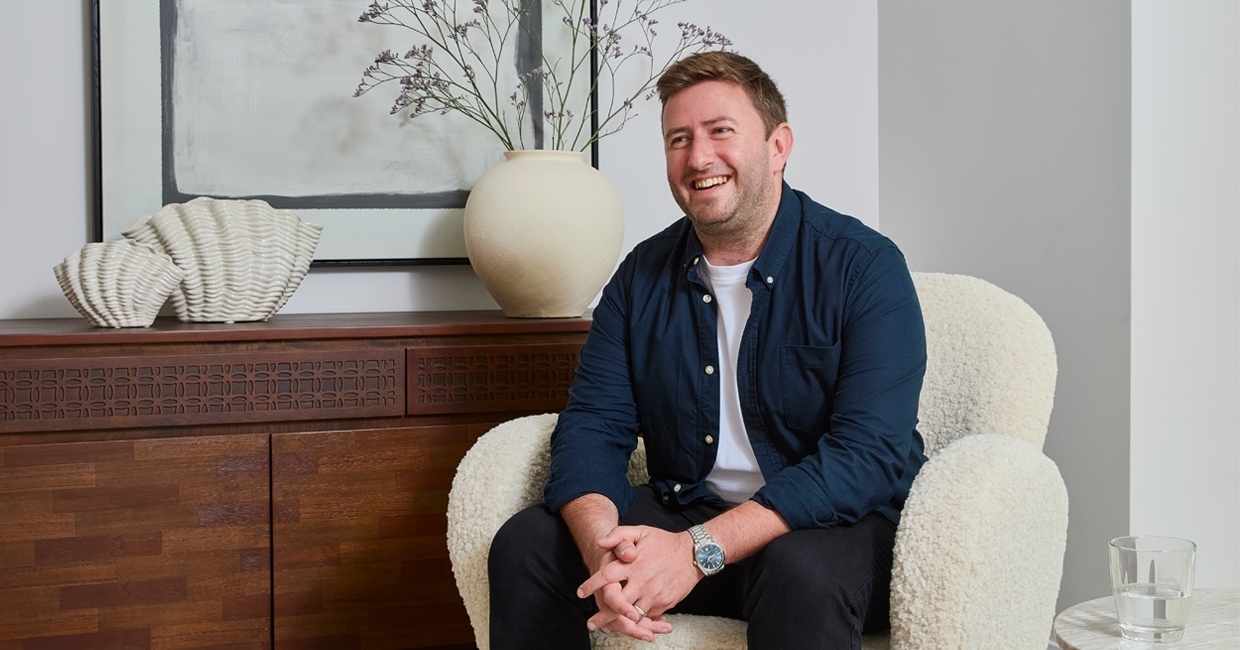
‘Great minds think alike’ is a lie. The fuel of innovation and evolution is the ability to think differently, and to approach problems from a new angle. This season, Furniture News is introducing some of the people and concepts shaking things up in the industry – including Bradley Hornby, the CEO of Homebound, a furniture rental service which aims to improve living spaces and save used products from landfill – enabling homes to evolve without the cost or commitment of ownership …
What’s the concept?
Homebound rents furniture by the room or by the whole home. We design the scheme, deliver it, install it, and collect it when the term ends. That covers home staging (dressing properties so they sell or let faster), furnishing for developers, build-to-rent operators, corporate relocation and short-let landlords, and full interior design packages.
What sets it apart is that we own all the stock. When a sofa leaves our warehouse, it isn't gone for good. It goes out, comes back, gets checked and refurbished, then goes out again.
How does it disrupt the status quo?
Most of the furniture industry works on a single sale. You make a sofa, sell it, and that's the last you see of it. A lot follows from that – how it's specced, how it's packed, and whether anyone can repair it.
Rental changes that. One sofa has to pay for itself over several placements, so ‘good’ means something different to us. We're not looking for the cheapest piece that survives one delivery. We want frames that can be re-upholstered, legs that can be swapped, and fabrics that can take a few years of tenants.
It also changes who's buying. A developer furnishing 40 flats isn't making an emotional purchase. It's an operational decision with a deadline, and the industry isn't really set up to sell to that person.
Then there's waste. The RSA and SUEZ estimated that around 800,000 tonnes of reusable furniture ends up in UK landfill every year. Every placement we get out of a piece is one less purchase headed that way.
How did you identify this niche?
We've moved around a lot, and every time it was the same problem. You either buy a houseful of furniture you'll have to sell, store or throw away when you next move, or you end up with whatever the landlord left behind. There wasn't a good option in between.
The more we looked into it, the clearer it got that this wasn't just a problem for people moving house. Agents need a flat to look lived-in for a few weeks, developers need show homes for a few months, and operators need 40 flats furnished before the first tenants arrive. All of them need furniture for a set period, and all of them were stuck buying it outright. That's the gap we built Homebound to fill.
What support have you received in bringing it about?
Three kinds, each important in a different way. The first is suppliers who'd work with us on volume and, more to the point, would talk properly about building for rental rather than retail. The industry isn't used to that conversation, and the ones who took it on early have grown alongside us.
The second is clients who backed us before we had a track record. Agents and developers let us dress a property on the strength of a conversation, and a lot of our growth since has come through those same people.
The third is investors who understand this is a capital-heavy model, and that stock sitting in the warehouse is an asset, not a cost.
… and what opposition have you encountered?
The one we hear most is that renting is a downgrade, a cheap option for people who can't afford to buy. Most of our work is commercial, though. Someone renting 40 flats' worth of furniture is deciding where to put their capital, not cutting corners.
Some people in the trade worry that rental eats into retail. We'd argue the opposite – it reaches customers who were never going to buy, like a developer who needs a show home for nine months or a landlord between tenants.
Then there's, ‘Won't it all come back wrecked?’ Some of it comes back marked, and that's exactly why we run our own warehouse, inspection and repair, rather than outsourcing it.
And there's the money. You buy the stock before it earns anything. That's the main reason more people don't run this model, and it's why you need tight operations from day one.
What the long-term picture?
Our aim is for rental to be a normal way to furnish a space, not a niche option people only come across by accident. Developers, operators and agents should be able to furnish 40 flats as easily as they'd book a cleaner.
Next year is a big one for us. We're targeting eight-figure revenue and launching in the US. Build-to-rent and short-let are growing fast there, and the problem looks just like it does here – operators need good-looking spaces quickly, and buying outright doesn't make sense for a nine-month showhome or a flat between tenants.
We're also building the tools behind it. The goal is for a client to spec a scheme, see what it'll look like and book the install in days rather than weeks. The faster that gets, the less rental feels like a compromise.
Meet more furniture industry disruptors in November's issue.