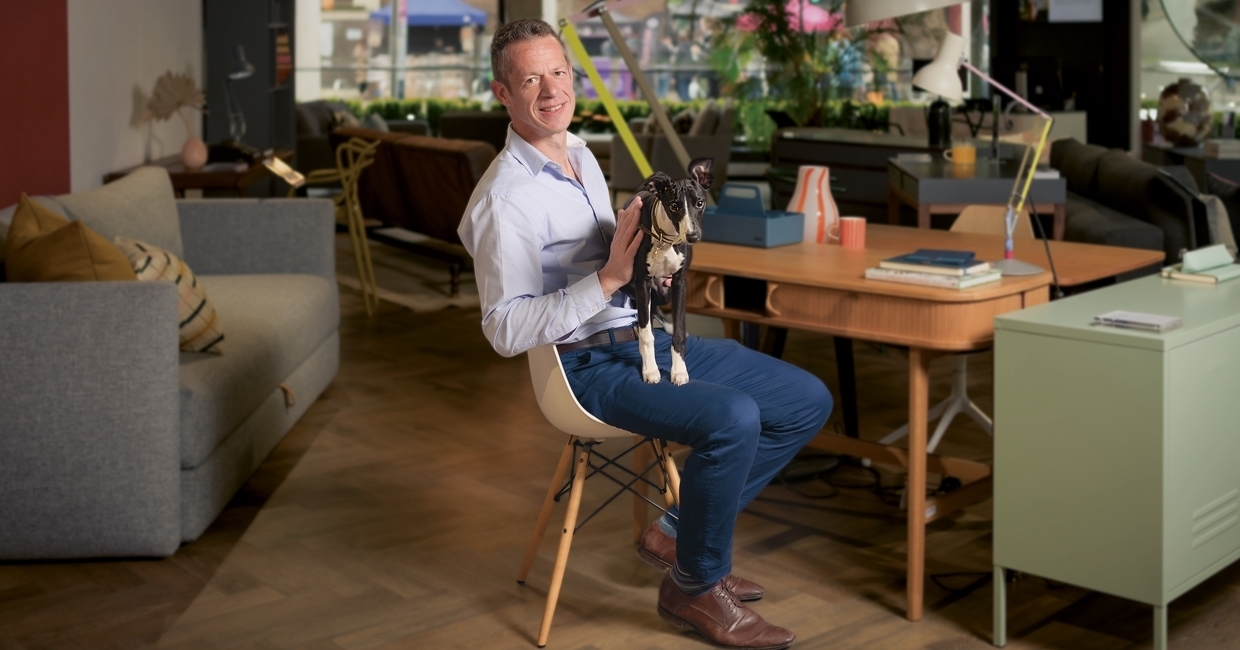
Heal's may have survived in retail for more than two centuries, but the need to evolve has never been more pressing. CEO Hamish Mansbridge, now a decade into his role, has announced a bold strategy of store expansion, operational improvement and the brand’s biggest-ever marketing campaign, Where Design Lives – and he invited Furniture News’ Paul Farley back to Heal’s iconic flagship store to share his exclusive insights …
Much has changed here. In 2023, Heal’s relocated within its historic Tottenham Court Road building, moving out of upstairs and instead occupying the ground and lower ground floors. The store still covers some 50,000 sqft, but the space now “works much better for the business” says Hamish, who admits that he had reservations when the move was proposed.
“We had total freedom to move – or not – around this building,” he explains. “At first I was resistant, but the financial advantages deserved consideration, and we’ve ended up with a better shop, without a doubt.”
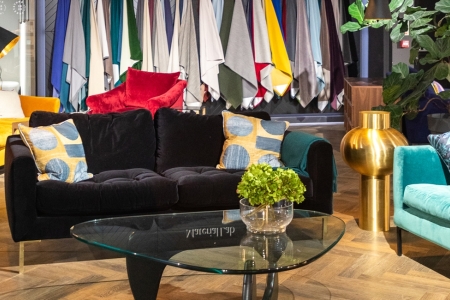
As Hamish guides me through the new shop floors, the benefits quickly become clear. The lighting and decor are sympathetic to the surroundings – muted and warm at street level, bright and clean below. Throughout, the herringbone flooring flows, the views are extensive, and thanks to an upgraded aircon system, the temperature is just right.
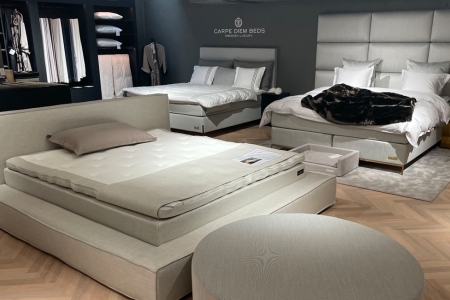
The ground floor now houses Heal’s living, dining, accessories, lighting and furnishings, while the lower ground features its bedroom offer and most of the branded spaces – both of which once occupied the upper floors. They are linked by three staircases, including the iconic Cecil Brewer spiral staircase (which dates back to 1916) and its thoroughly modern counterpart, a criss cross structure designed by Matthew Hilton.
The latter is probably Hamish’s favourite aspect of the refurb – and he’d rather focus on the results of the project than recall the challenges of adjusting a listed building.
“There’s much better movement around the store now,” he says, “much better flow, and a massively increased shop frontage.”
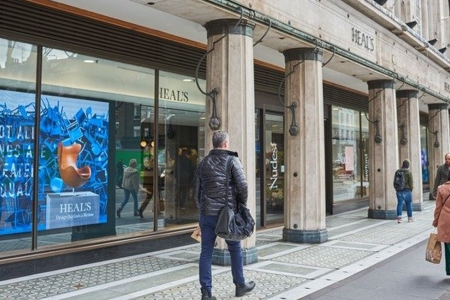
The pomp and heritage of the building’s facade remains, and now wraps around its sides. What was farmland back at Heal’s inception in 1810 is now offices, media studios and hospitality spaces (the new Loading Bay cafe serves the store), but the frontage of the entire block tastefully reinforces the retailer’s identity.
Prestige brands very much remain a “vital component” of Heal’s offer, adds Hamish, and account for around half of its sales. “We are seen as the place to buy,” he notes, and the brands represented in-store – from Vitra to Vispring, all tastefully housed and signposted – exert a customer pull that hasn’t waned.
“The Eames Lounge Chair is now 70 years old, and we still sell lots of them each year,” says Hamish.
Read the rest of the interview in January's issue.