
In June's issue, Furniture News shared a range of viewpoints on the likely upcoming reforms to the Furniture and Furnishings (Fire) (Safety) Regulations 1988, which are set to impact domestic upholstered furniture later this year. Here's what Claire Kelly, GM at Clarkson Coatings, had to say …
The Office for Product Safety and Standards (OPSS) consultation published in March 2026 proposes significant amendments to the Furniture and Furnishings (Fire) Regulations (FFRs), including the removal of the open flame ignition test.
This is the first consultation since the regulations were introduced in 1988 – following reviews in 2016 and 2023 – to explicitly recommend eliminating this requirement.
While the stated aim is to maintain existing levels of fire safety while reducing the use of chemical flame retardants (CFRs), the removal of the open flame test represents a material reduction in test severity and a step backwards in consumer protection.
At Clarkson Coatings, we test more than 50 upholstery fabrics every day and observe first-hand the wide variation in burning behaviour between different fabric constructions. Fire performance is not theoretical – it is measurable, and the consequences of insufficient protection are well documented and potentially catastrophic.
Under the current FFRs, face fabrics are required to act as a primary barrier to ignition, preventing heat and flame transfer to highly combustible PU foam fillings. This preventative barrier is fundamental to the success of the regulations. Our testing repeatedly shows that many fabrics that pass the open flame test also pass the smoulder test, but the reverse is frequently not the case.
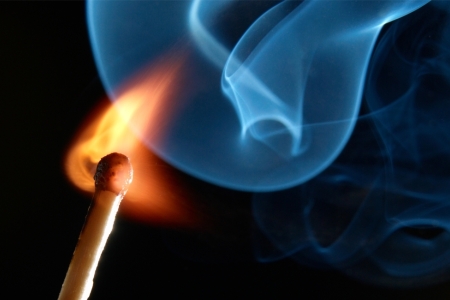
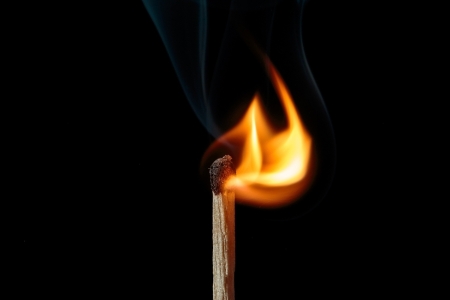
Fabrics engineered only to meet smoulder resistance often ignite readily when exposed to a small flame. In real world terms, a smoulder-only compliant sofa may ignite from a match, candle, lighter or overheated electrical device, leading to faster fire development and reduced escape time. By contrast, a fabric that meets open flame resistance will typically self-extinguish, with minimal localised damage.
This distinction is not academic. The Government-commissioned Greenstreet Berman report (2009) concluded that the FFRs save an estimated 54 lives per year, prevent approximately 780 casualties, and avert over 1,000 domestic fires annually. These outcomes are directly linked to the preventative nature of the testing regime, particularly resistance to small open flames.
Although CFRs are not explicitly mandated under the regulations, they historically provided a reliable, cost-effective and adaptable means of achieving compliance across a wide range of fabric types and constructions when the regulations were introduced.
However, regulatory and environmental expectations have evolved. By the third consultation in 2023, a commonly used brominated flame retardant had been classified as a Substance of Very High Concern (SVHC) under REACH, prompting legitimate concerns and industry-wide efforts to identify alternatives.
Since 2014, Clarkson Coatings has invested heavily in collaboration with chemical suppliers and fabric manufacturers to develop new fire retardant technologies. This process demanded significant capital, time and technical expertise.
Some approaches failed to meet fire performance requirements – others proved commercially unsustainable. There has never been a universal solution – particularly against a backdrop of tighter chemical regulation, evolving fabric trends, increased emphasis on circular economy principles and ongoing market uncertainty.
Crucially, recent innovation has delivered effective non-halogenated treatments and chemical-free lamination systems that maintain fire performance while supporting environmental objectives. These technologies directly align with the Government’s stated aims.
However, this progress has not been adequately reflected in OPSS data or decision-making, resulting in proposals that underestimate the industry’s ability to improve sustainability without sacrificing safety.
There also remains widespread misunderstanding regarding the chemicals currently used in upholstery manufacture. UK face fabric flame-retardant back coatings involve the application of a coating to the reverse of the fabric, offering ignition resistance alongside improved seam slippage and dimensional stability. Active ingredients are securely bound within an acrylic binder. TCPP – often referenced in public debate – has never been used to treat UK face fabrics, and chemical safety is already governed under robust REACH compliance obligations.
With lower-impact fire retardant solutions now entering the market, and furniture designs increasingly incorporating electrical charging, motors and smart technology, the proposal to remove the open flame test is premature and poorly aligned with real-world risk. Fires that do not occur – because preventative measures work – are absent from statistics. To weaken testing because those fires are unseen is to fundamentally misunderstand how the current regime delivers protection.
Reducing test severity risks increasing domestic fire incidents, endangering consumers and exposing manufacturers and retailers to increased liability. More importantly, it represents a missed opportunity to protect UK businesses, encourage innovation, maintain fire safety, and achieve environmental progress in parallel.
The Furniture and Furnishings (Fire) Regulations have saved lives for nearly four decades. Any reform should build on that success – not dilute it.
Read the rest of the feature in June's issue.