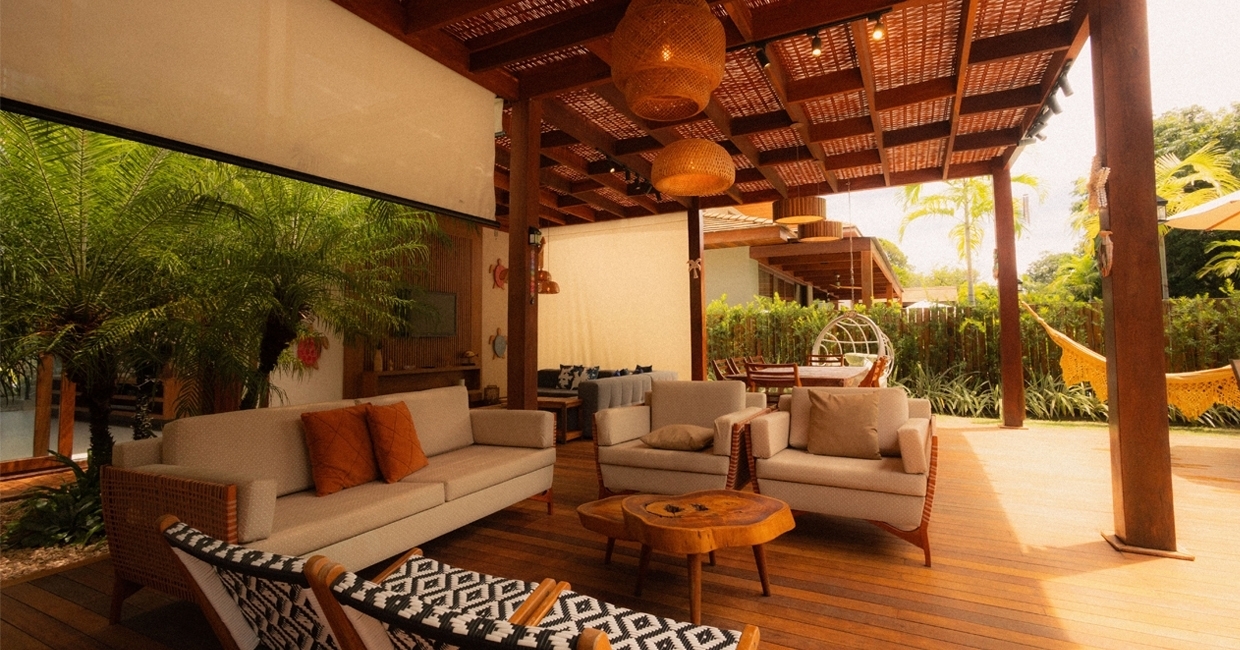
A patio used to be something customers opened up in June and shut down by October – now it's closer to another room in the house, somewhere people actually live, not just visit when the sun's out, and, writes Joan Rangara, for retailers and designers, that shift is worth paying attention to …
If a client's planning to upgrade their outdoor space, the brief shouldn't stop at something that looks good in photos. The goal is a space that still feels right on some ordinary grey Tuesday, not just during the one dinner party they're picturing.
The evolution of outdoor living
Remember when 'outdoor living' was basically a deck and a couple of plastic chairs nobody ever got around to putting away? That's mostly behind us now, and it's changed what's actually selling. Customers want their garden to hold its own against any room in the house, and that's reshaped everything retailers stock and designers specify, starting with layout and running through to material choice.
Gardens used to sit apart from the house. Not any more. Wide sliding doors, flooring that carries straight through from the kitchen, a colour scheme that doesn't stop dead at the threshold … all of it working toward the same brief – making it harder to tell where inside ends and outside begins. That's a conversation worth having early with clients, since it affects sourcing decisions on both sides of the door.
Purpose is the part a lot of buyers skip, and it's often where a good retailer or designer adds the most value. Too many patios end up as a furniture set that looked nice in a catalogue, with no real thought behind it.
Ask what the client actually wants out there. Coffee alone before anyone's awake? A table big enough for the whole family on a Sunday? Somewhere covered so the kids can play while someone keeps half an eye on them from the kitchen?
That same demand for a garden that actually does something has pushed garden buildings well past their old job as glorified sheds, and it's a category worth stocking seriously. Done right, one can be an office, a studio, a small gym, or a spare room for guests, all without adding so much as a brick to the house itself. It's one of the stronger growth areas retailers are seeing right now.
Bringing interior design principles outdoors
A surprising amount of what makes a living room feel good works outside too. The harder part, and where product knowledge really earns its keep, is steering customers toward materials that can take rain, sun and swinging temperatures without looking beat up after one winter.
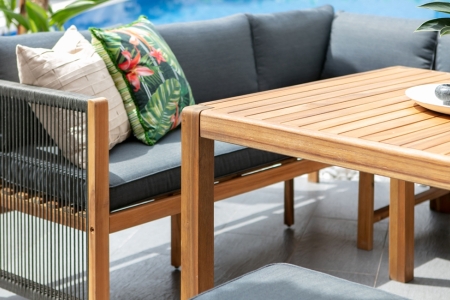
Natural materials such as timber and stone help outdoor spaces feel warm and welcoming, and pairing these with a consistent colour palette creates visual harmony between a client's interior and exterior ranges.
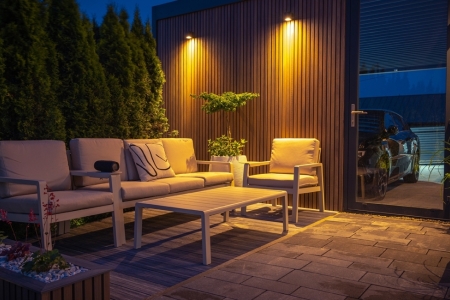
Beyond that, it's the smaller details that do the real selling – a decent rug, cushions, lighting that isn't just a single bulb glaring down, fabric with some texture to it. These are the add-ons that turn a patio from technically usable into somewhere a customer actually wants to be, and they're worth featuring prominently in-store or on a showroom floor.
Layout deserves more attention in consultations too. Furniture should pull people together without boxing anyone in. Crowd a dining set too close to a flower bed or path and the whole thing feels pinched, no matter how well the individual pieces are made.
Craftsmanship matters even more outside than in, since everything out there is taking a hit from weather that indoor furniture never has to survive. It's worth explaining to price-sensitive customers that spending more on something built properly usually costs less over time, through less repair and a longer working life.
Palmako is a useful reference point here. Their timber structures are built for the long haul without giving up on looks, which makes the case, in front of a customer, that durability and style aren't a trade-off, even if it can feel that way standing in a showroom.
Flexible spaces for modern lifestyles
Client needs shift, and the outdoor spaces retailers sell into should be able to shift with them. A garden built around one single use tends to feel limiting within a few years, which is worth flagging at the PoS.
The stronger pitch is furniture that isn't fixed in place, lighting that can be adjusted, and planters that can be moved around as needs change. These are the sorts of ranges that let a customer reshape their space without ripping anything out and starting again, and they tend to be easy upsells once the core pieces are chosen.
Adaptable garden cabins are worth highlighting here too, since they offer exactly this kind of flexibility. The same structure might work as an office on weekdays, a workshop on Saturday, and a guest room whenever someone's staying over. That's a lot of use out of one footprint, which is a strong argument for customers weighing up a cabin against several smaller, single-purpose builds.
Weather protection is another area worth raising proactively. A pergola, a retractable awning, a bit of covered seating, none of it looks essential until the sky turns and the customer realises they can still sit outside anyway. Positioning these as part of the original spec, rather than an afterthought, is what stretches the value of the whole setup across the year instead of just a handful of good weekends.
The future of outdoor furniture and garden design
Customers are buying smarter now, and that's worth building into any range plan. Rather than swapping furniture out every season because it broke or fell out of fashion, more buyers want pieces that'll still be standing, and still look decent, five years on.
That's part of why sustainable materials keep coming up in customer conversations – timber that's genuinely been sourced responsibly, fabric made from recycled fibres, furniture that can be repaired rather than binned the moment something cracks. It's a straightforward story to tell on the shop floor – less waste, and a garden that still looks good well past its first summer.
Multifunctional pieces are having their moment too, and they're worth featuring prominently. A bench that opens up for storage. A table that extends when the guest list grows. Seating that can be rearranged on a whim.
None of this is really about the one big barbecue in July. It's about the space earning its keep on any ordinary day, which is increasingly the argument that closes the sale.
Conclusion
Helping a client get their outdoor space to feel as good as the inside of their house starts with an honest conversation about how they'll actually use it, not how it'll look in one photo taken at golden hour.
Get the layout right, point them toward materials that hold up, steer them toward furniture they'll actually want to sit in, and leave room for the space to change as their life does. Get that right, and the garden becomes somewhere they work, unwind, host people, and live, in every season, not only the warm ones – which is exactly the kind of outcome that keeps customers coming back.
Image courtesy Pexels/Alef Morais