Collecting a customer's old sofa on delivery or clearing last season's displays creates waste obligations that sit alongside the sale, and several are easy to miss, writes wellbeing and sustainable lifestyle specialist, Annie Button …
With the January Furniture Show returning to the NEC Birmingham from 24-27th January 2027, many retailers are already planning showroom resets. Outgoing displays have to go somewhere, and delivery crews are often asked to take a customer's old sofa away when the new one arrives. Both jobs look like logistics, but legally they're waste management, and the rules apply to retailers as well as the specialists they hire.
Taking a sofa back raises carrier questions
A retailer whose crew loads a customer's old sofa onto the delivery van is transporting waste. In England, businesses that transport waste generally need to register as waste carriers, and gov.uk says an unregistered business can face an unlimited fine.
Registration is usually free for businesses that only transport waste they produce themselves, so retailers collecting customers' furniture should check which route applies to them. Retailers that use an outside collector can check the Environment Agency's public register to confirm a carrier is genuinely listed before handing anything over. Anyone unsure of their own position should ask the Environment Agency directly.
Upholstered seating has rules of its own
Sofas, armchairs and recliners are the awkward case. Environment Agency guidance for England says waste upholstered domestic seating may contain persistent organic pollutants (POPs), and it covers household-type seating from businesses as well as households, so ex-display sofas can fall within it. Recliners are listed too, whether electrical or mechanical.
Waste that contains POPs must be kept apart from other waste and described on the transfer note as 'domestic seating waste containing POPs', using waste code 20 03 07. It has to be incinerated, and landfill operators must not accept it. Commercial seating of a type not used in the home sits outside the definition, although the guidance warns it's at particular risk of containing POPs and should be considered as part of your duty of care.
Working with a licensed collector
Plenty of retailers already offer collection when new furniture is delivered. MattressNextDay, for example, lets customers have an old mattress collected when a new one arrives. Mattresses sit outside the seating guidance, but the point carries over to sofas, which is that the handling and the paperwork have to be right every time.
Retailers who would rather not run their own vehicles can book a licensed sofa removal service. Waste King, for instance, sends insured and licensed two-person crews who arrive within a two-hour window, and issues Waste Transfer Notes digitally as soon as the contract is signed, keeping copies for at least two years.
Ex-display stock needs the same care
A showroom reset can produce a lot of waste seating in one go. Pieces that can't be sold on or reused become waste, and because the guidance covers seating from businesses, they can fall under the same separation, paperwork and incineration rules as a customer's old settee.
Tipping display seating into a general skip is the mistake to avoid, because any mixed load has to be managed as POPs waste until the seating is separated again. It helps to decide before the reset starts which pieces will be sold on, which will be reused elsewhere in the business and which will be disposed of, and to name one person who signs off each route and keeps the paperwork together.
Electrical stock follows a different rulebook
Electrical items come under the WEEE regulations. Retailers that sell electrical equipment to households must give customers a way to dispose of an old item like for like when they buy a new one, through a free in-store service, an alternative free service or, for those with no service of their own, the Distributor Take Back Scheme.
Customers must also be given free written information about the service. For furniture businesses, that can include pieces that need electricity to work properly, because gov.uk's WEEE guidance has specific definitions for them.
Electric recliners are the exception worth knowing. They're classed as upholstered seating, so their waste falls under the POPs guidance and outside WEEE, even though they plug in.
Record keeping is tightening
Digital waste tracking became mandatory for permitted waste receiving sites in England on 1st October, and carriers, brokers and dealers are due to follow in October 2027, with existing transfer notes still required for now. Before the January show season starts, it's worth checking a collector's registration, asking what paperwork comes with each job, and agreeing who handles what on the day.
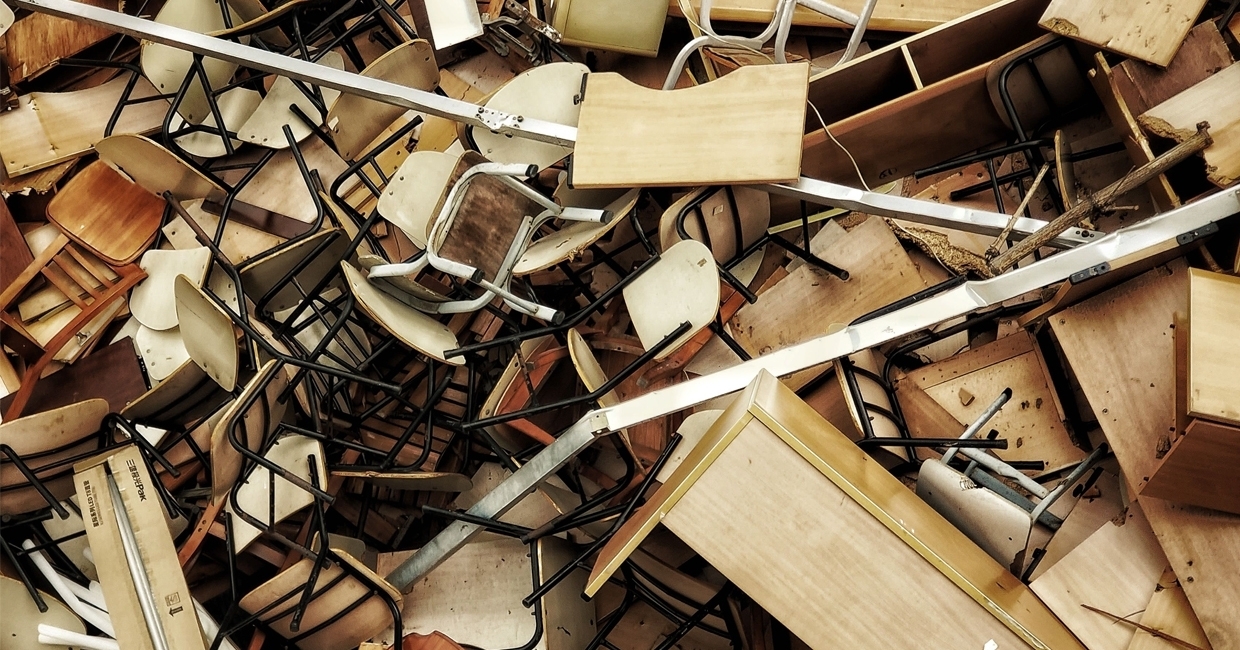
Image courtesy Pexels/Wayee Tan