
Andrew Goodacre, CEO of the British Independent Retailers Association (Bira), reflects on the findings of the association's latest retail crime survey and what they mean for independent furniture retailers across Britain …
Every six months, we ask our members about their experiences of retail crime. Every six months, the results make for difficult reading. But our latest survey findings have given me real cause for concern – not just because the numbers are moving in the wrong direction, but because of what lies behind them.
Almost 77% of respondents told us they had experienced theft in the past 12 months. Nearly 90% of those said it had got worse compared to the year before. Those are significant figures on their own, but what strikes me most is the human reality our members describe alongside them. Theft that happens weekly, sometimes daily. Thieves who laugh at staff as they walk out of the door. Retailers who told us, simply and bluntly: "We are on our own."
That phrase has stayed with me. Because in many ways, that is exactly what our members are being asked to be – on their own. Over 45% of those who experienced theft did not report it to police, not because they did not care, but because they have lost confidence that anything will come of it. Of those who did report, police attended in 67% of cases, and of those, just 35% led to a prosecution. When you see those numbers repeatedly, year after year, you stop reaching for the phone.
The financial impact is also growing. More than one in 10 of our respondents estimated their total annual cost from retail crime – stolen stock, security investment, staff time – at over £10,000.
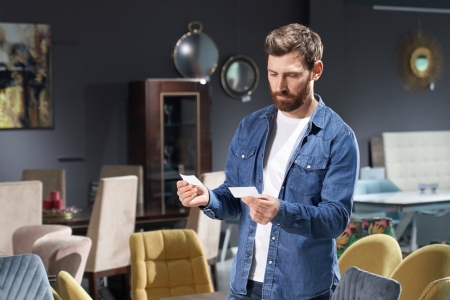
For furniture retailers, who often operate on tight margins with high-value display stock on the floor, the challenge is particularly acute. Many have had to rethink how their showrooms look and feel, pulling items back from prominent display positions or increasing staffing levels simply to deter opportunistic theft.
Over a third of our survey respondents told us those kinds of changes had hit sales or damaged the customer experience. In a sector where the whole point is for customers to see, touch and imagine a piece in their home, that matters enormously.
I am also concerned about the direction of travel. Our members are telling us that theft is becoming more organised, more deliberate, and more targeted. They are describing repeat offenders known by name, groups using distraction techniques, and incidents they believe are connected to drug dependency and informal resale networks. Staff of all ages are being verbally abused – and in some cases physically threatened – simply for trying to do their jobs. Over two thirds of respondents said verbal abuse had increased in the past year. That is not a small or isolated problem.
What do our members want? The answer from this survey is consistent with what we hear every day. Stronger sentencing. A better police response rate. More visible presence on high streets. Clearer guidance on what evidence is needed to pursue a case.
These are not unreasonable asks. They are the basic conditions that allow a business to trade with confidence.
I want to be clear that we are not pointing fingers without context. Retail crime is a complex problem, and we know that police resources are stretched and that wider social factors are at play. But independent retailers are absorbing costs and pressures that are not of their making, and they deserve better support than they are currently receiving.
We will keep asking. We will keep publishing. And we will keep making the case that the high street cannot thrive if the people who run it feel they are fighting crime alone.