The humble garage has quietly changed its job, writes wellbeing and sustainable lifestyle specialist Annie Button. Across the country it's become a gym, a workshop, a studio or a home office – and for the furniture trade, that's a room category most showrooms still treat as an afterthought …
For decades the garage had one job. That's changed. The car has been nudged onto the driveway and the space behind the door handed over to whatever the household needs more – somewhere to train, to make things, or to work. With moving costs high and hybrid working now normal, more people are improving the home they own rather than trading up, and the garage is often the largest unused space they have.
The trade already knows that changes to the home drive spending. Furniture News has previously reported on the close link between property transactions and furniture purchases. Reclaiming a garage works on the same impulse, except there's no sale to wait for. A homeowner decides the room should do something new, and almost immediately needs to put things in it.
The scale is bigger than it looks
Research by RAC Home Insurance found that more than half of the UK's estimated 11 million garages are no longer used to park a car. Around 47% serve as a workshop or DIY space, 9% as a home gym, and 8% have become another room entirely.
Separate research from Churchill points the same way – more than a third of drivers with a garage never park in it, and, among those who have repurposed the space, 14% have created a home workshop or studio and 8% a gym. Modern cars have outgrown many older garages, so millions of rooms now sit behind a door waiting for a purpose.
Protecting the furniture from the space
These spaces ask more of furniture than an ordinary room does. A converted garage that still behaves like a garage, with bare blockwork, a draughty up-and-over door and a floor that sweats in winter, will see off most pieces within a couple of seasons. Damp swells timber, corrodes fixings and lifts veneers, and temperature swings are hard on upholstery and finishes.
The biggest single variable is usually the door, which covers the largest opening and does most of the work in keeping cold and damp out. Specialists such as Wessex Garage Doors set out how the door is specified, covering the thermal efficiency, security and space considerations that decide whether a converted garage holds a steady temperature or stays a cold store. Get the envelope right, and the furniture inside stands a far better chance of lasting, which protects both the sale and the showroom's reputation when the customer comes back.
The retail opportunity
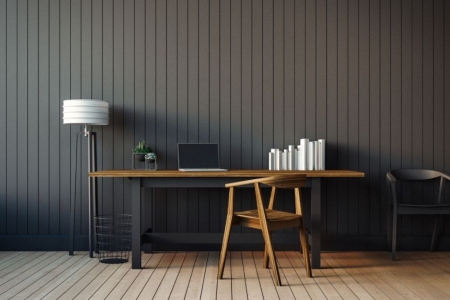
For retailers, this is where it sharpens. A reclaimed garage rarely has one fixed use, so the pieces that suit it tend to be flexible as well as robust – modular storage, stackable or fold-away seating, and desks that double as workbenches. A garage office, the most common conversion, alone calls for a desk, task seating, shelving and lighting.
Furniture News has explored how form and function are converging as buyers move towards clutter-free, multi-purpose living, and the garage is close to a perfect test case.
The showrooms most likely to benefit are the ones that stop treating the garage as a fringe case. Styling a vignette around a garage office, and training staff to talk through durability and adaptability, can turn a vague enquiry into a sale. Homeowners are furnishing these rooms whether the trade leads the conversation or not, and the businesses that treat the reclaimed garage as a genuine buying occasion will pick up the demand the rest of the market overlooks.
Annie Button is a freelance writer specialising in wellbeing and sustainable lifestyles.
Image courtesy Deposit Photos/AllaSerebrina