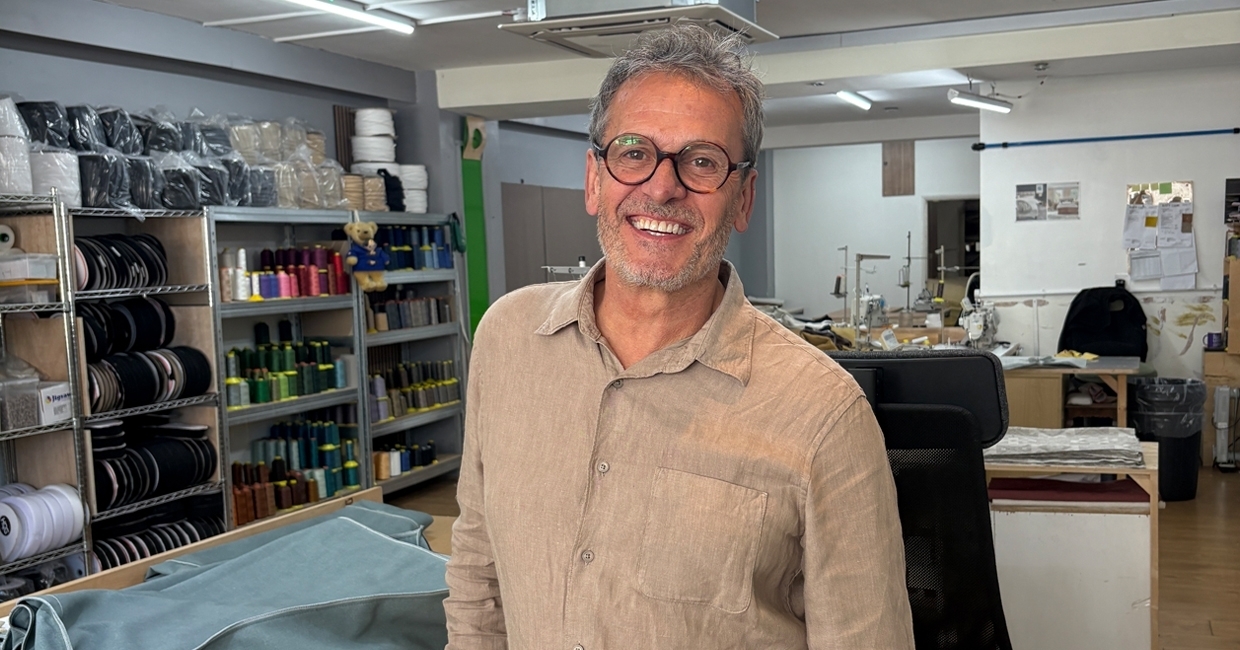
Sometimes you need to sink to stay afloat. Having redeveloped its London store last year, Raft Furniture went into administration this spring, citing mounting liabilities and operating costs – but now it’s back in business with a retail concept like no other, says co-founder and director Mick Quinn …
A slimmed-down Raft Furniture – the manufacturer/importer/retailer best known for its reclaimed teak offer and handmade upholstery – now operates from just two retail locations.
Alongside its 3,500 sqft showroom in St Albans is the innovative House of Raft, its 20,000 sqft London flagship, which incorporates a showroom, artisan workshop, interior design hub, photography studio and outlet. It is a bold exercise in retail theatre, and while it may occupy the same site as Mick’s first store, 21 years on, it very much represents the brand’s future …
Before looking in depth at this overhaul, can you tell us about your former retail offer and the disruption of the past year?
Raft has historically operated through a broader network of traditional showrooms, alongside its ecommerce business. However, the furniture-buying journey has changed considerably in recent year. Consumers are increasingly researching products online where they can compare options digitally and use physical stores in a more considered way.
That led us to look closely at what we wanted our physical retail presence to achieve in the future. Rather than simply maintaining a traditional store network, we’ve chosen to concentrate on creating more purposeful, experience-led physical spaces, complemented by a stronger ecommerce proposition that allows us to reach customers nationally.
The changes of the past year have given us an opportunity to accelerate that thinking and build a business around where we believe the market is heading.
How did the administration and restructuring come about, and what’s changed?
There’s currently a negative correlation between in-person shopping and the cost of renting physical retail spaces. So, as more customers have started shopping online, landlords are demanding more rent for retail space. It makes no sense. Many landlords want to change manufacturing and shops into residential spaces, so they’re happy to put a squeeze on you.
The restructuring provided an opportunity to fundamentally reassess the business and how we wanted to operate for the future.
The biggest change is a much clearer focus on the Raft ecommerce proposition and on the channels through which customers want to engage with us. We are concentrating our physical presence around locations that can deliver a genuinely differentiated experience, while continuing to develop and invest in ecommerce as an increasingly important part of the customer journey.
It is less about having more physical locations and more about making every customer touchpoint more meaningful.
What prompted you to combine showroom and factory?
Because the public experience is all important, and what they really want is to know the product is physically being made in England. The idea that they can see their sofa being sewn, see it being upholstered and see the quality of the frame inside their sofa adds real value to the experience.
We wanted to bring customers much closer to the product and the people who make it. Our sofas are handmade locally in London, so having the workshop alongside the showroom gives customers the opportunity to see that craftsmanship first-hand, rather than simply being told that their furniture is made here.
When you visit House of Raft, you can see our artisans actually making sofas, and understand the care, skill and materials that go into each piece. It creates a direct connection between the place where a customer discovers their sofa and the place where it’s made.
It also reflects how we believe the role of a modern furniture showroom is changing. Customers can discover and research products online, but a physical space can offer something digital can't – the ability to experience the furniture, meet the people making it and see genuine London craftsmanship in action.
Did the decision to remodel the building present any key challenges?
Physical challenges, yeah – although just boring logistics. Cardboard crushers and bailers had to be raised up two floors to go into old-fashioned factory shutters, and stuff like that. Fortunately, our previous sofa factory was just down the road in Wembley, but it was still a Herculean effort to move everything.
In many ways it was pretty straightforward, because there’s a natural symbiosis between a product being manufactured and completed. It’s one and the same, so it flows quite easily.
However, there were things to rework and consider carefully, out of respect for our artisans and our customers. We want to provide an immersive experience without overwhelming or putting pressure on our artisans, who have worked in the privacy of our Wembley workshop for years – so the public has to be escorted through the workshop, allowing the procedure to be correctly narrated, and time and space to be given to the workers.
When the bigger space opened up we saw a huge opportunity – especially alongside the other redevelopments on Cricklewood Broadway, such as the new Waitrose that’s opening later this year.
The key challenge was creating a space where a working workshop and premium showroom could coexist naturally. We wanted to preserve the authenticity of a genuine working environment while creating a comfortable and inspiring experience for customers. Rather than separating the two worlds, the design deliberately allows the manufacturing process to become part of the customer experience.
Showing the process behind the product will undoubtedly add value to your offer – how else are you communicating the local craftsmanship message?
We’ve always done things the right way without shouting about it – for example, we were green when it wasn’t cool (saying this, we know there’s an opportunity there, and have this built into our upcoming ecommerce strategy). Whenever anyone comes in-store, though, they are fascinated to discover the workshop. We are so proud to offer such an authentic experience where customers can see our artisans working, understand the materials and processes involved and speak to our team about the construction and customisation of their furniture.
How do you envisage a typical customer journey taking place?
Increasingly, we expect the customer journey to begin online. We are investing significantly in our ecommerce and digital experience to make it easier for customers to discover Raft, explore our collections, understand our craftsmanship and find the right products for their homes.
A customer might discover us through search, social media or digital content, explore different sofa styles, fabrics and configurations online, and then decide whether they want to visit House of Raft or St Albans to experience the furniture in person. For a considered purchase such as a sofa, that physical experience remains incredibly valuable – customers can sit on the furniture, feel the materials, speak to our designers and see our sofas being handmade locally in London.
One of our biggest touchpoints for customers trying our stuff out in person, rivalling even our stores, is their friends’ homes. We have an excellent customer retention and referral rate. If someone bought a sofa from Raft 20 years ago, chances are they’ll never go anywhere else. This word-of-mouth promotion makes the lifetime value of a customer incredibly significant.
The aim is to make Raft accessible to many more potential customers than our physical footprint alone allows. Ecommerce gives us the opportunity to reach customers nationally, while our showrooms provide a deeper, more immersive brand experience for those who want it.
The two channels are designed to work together seamlessly but equally – customers don't necessarily need to visit a showroom at all. We want our digital experience to give customers the information, inspiration and confidence to engage with and ultimately purchase from Raft online, supported by our design team where needed.
Read the rest of the interview in November's issue.